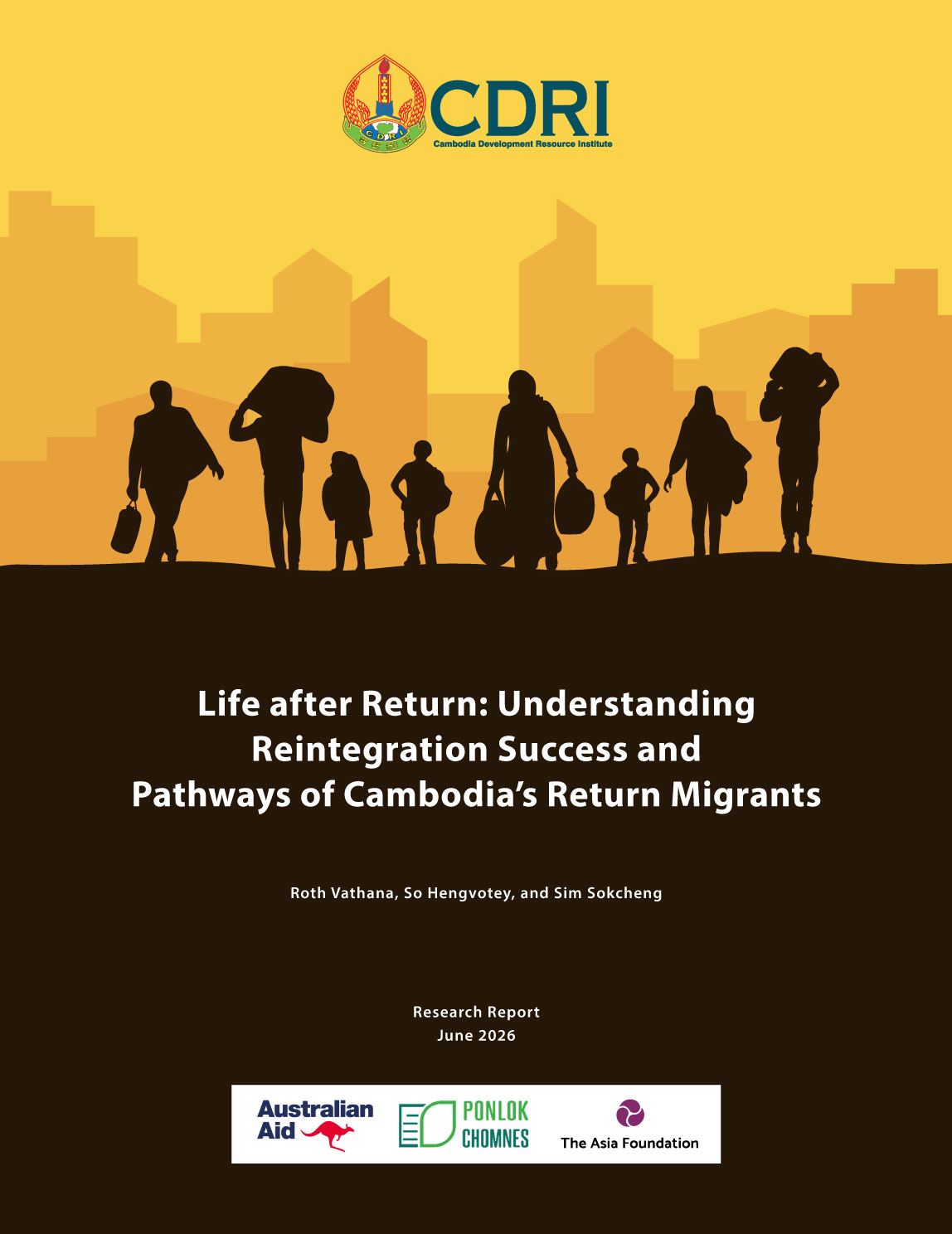
Life after Return: Understanding Reintegration Success and Pathways of Cambodia’s Return Migrants
Keyword: Household debt, employment challenges, Reintegration Index, return migration, reintegration outcomes, vocational training
Abstract/Summary
This study examines the reintegration of Cambodian migrant workers who returned from Thailand following the Cambodian‑Thai border conflict. Using survey data from 852 returnees across six provinces, a Reintegration Index (RI) was developed to assess outcomes across economic, social, psychological, and institutional dimensions. The findings show an overall moderate reintegration level (average RI score 0.639). Social reintegration was the strongest, reflecting positive community acceptance, while economic and psychological reintegration were moderate, with challenges linked to employment, income stability, and household debt. Institutional reintegration was weakest, due to limited access to training, education, and social protection. Differences were observed by gender and age, with men and younger returnees adapting more successfully. Policy recommendations highlight the need to strengthen job‑matching services, expand vocational training, improve debt management support, and promote balanced local economic development. Targeted measures for female returnees and vulnerable households are also emphasised to support sustainable livelihoods and reduce future migration pressures.
Related Publications
Impact of the Border Closure on the Cambodian Economy: A Dynamic CGE A...
07-Sep-2026
This report assesses the economic consequences of the 2025 Cambodia-Thailand border closure using GTAP-FIN, a dynamic...