
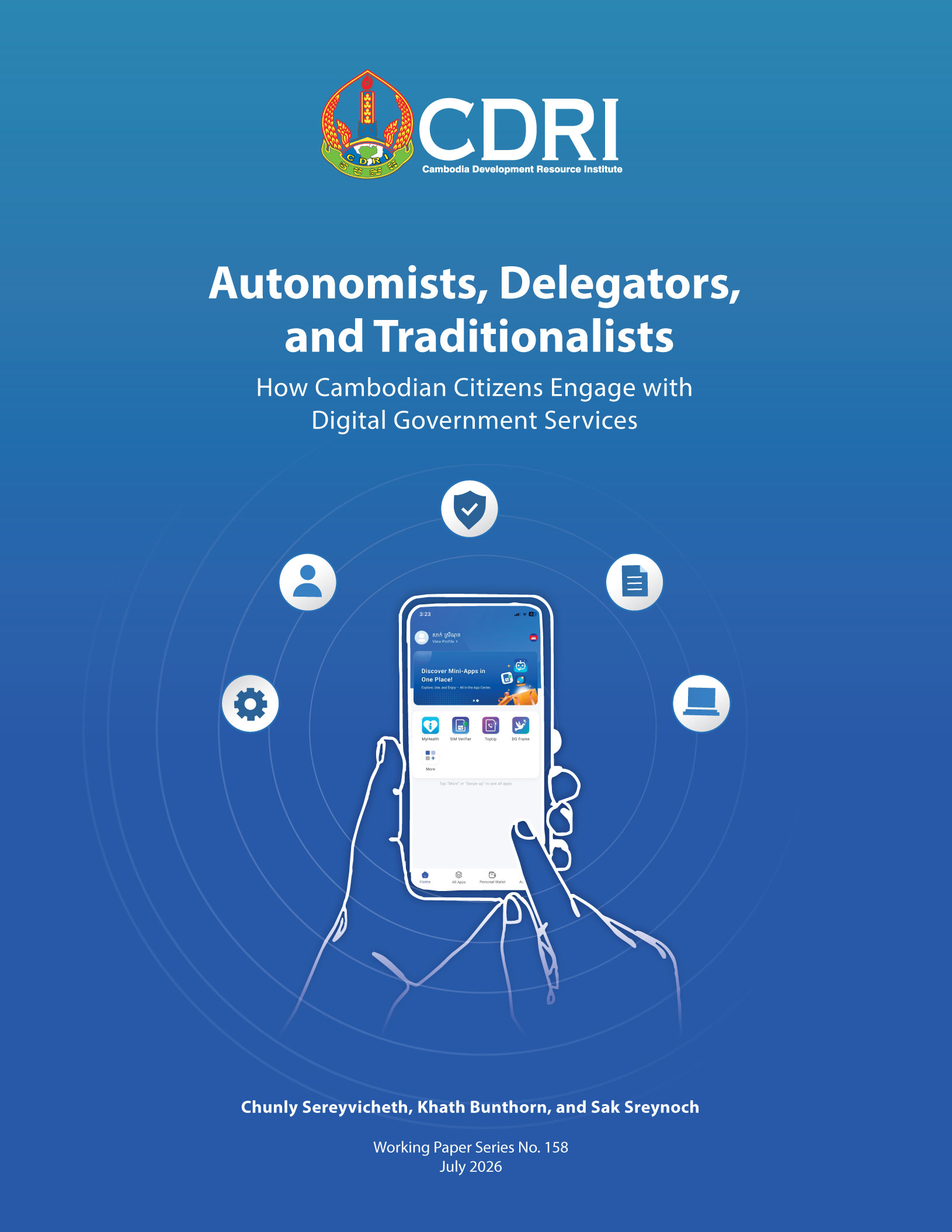
Autonomists, Delegators, and Traditionalists: How Cambodian Citizens Engage with Digital Government Services
Keyword: Digital government, e-government adoption, citizen engagement, digital literacy, Cambodia
Abstract/Summary
This working paper presents a nationally representative analysis of how Cambodian citizens engage with digital government services. Drawing on a survey of 1,200 adults across 12 provinces, the study examines the extent of digital service use, identifies distinct modes of engagement, and assesses the factors associated with citizens' interactions with the digital state. The findings show that engagement remains limited: 76.9 percent of respondents had not used a government digital service in the previous year. Low uptake is associated more strongly with capability and awareness gaps than with internet access, infrastructure, or trust in government. Among non-users, older and less-educated citizens are more likely to report digital skill barriers, while younger and more educated citizens are more likely to report limited awareness of available digital services. The study identifies three modes of engagement: Autonomists, who use services independently; Delegators, who access services through relatives, government officials, or other intermediaries; and Traditionalists, who continue to prefer in-person interactions. Regression analyses identify education, digital capability, and cognitive self-efficacy as the strongest predictors of digital engagement. The findings also point to a persistent challenge in digital service design: many citizens, including those who have used digital services, expect that online applications may still require in-person follow-up to complete procedures or receive services. The paper concludes by proposing policy measures to strengthen public awareness, digital capability, intermediary support, and institutional reform.
DOI: https://doi.org/10.64202/wp.158.202607
Related Publications
From Access to Adoption: Strengthening Citizen Engagement with Cambodi...
04-Sep-2026
More than three-quarters of Cambodians aged 16 or above (76.9 percent) had not used a government digital service in 202...
Unfolding India’s Development Partnership In The Mekong Subregion: A C...
06-Jun-2026
The Mekong subregion has received considerable attention from major powers due to its strategic location at the intersec...
Aid and Development in South-East Asia

06-Nov-2025
Southeast Asia exhibits varied developmental progress, meaning Official Development Finance (ODF) remains essential for...