
News
20 November 2026Regional Symposium "Revisiting Regional Value Chains in the Greater Mekong Subregion Countries"
Day 1 | Wednesday 18 November 2026 | Hyatt Regency Phnom Penh
Tariffs are rising, trade rules are shifting, and China–ASEAN trade has grown
roughly tenfold in two decades. Where does that leave Cambodia?
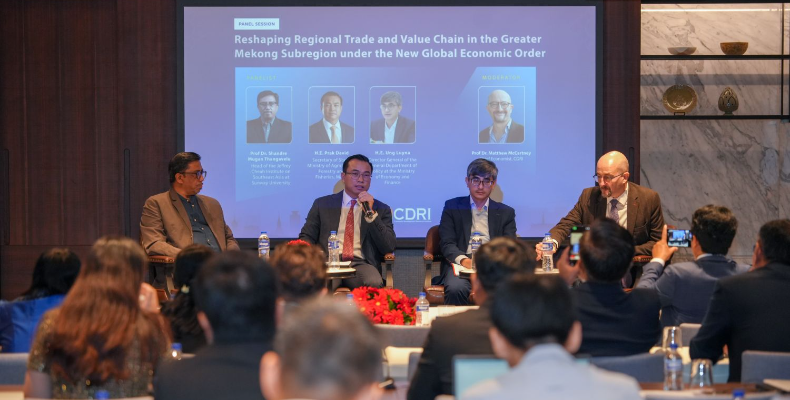
H.E. Prak David (Secretary of State at Cambodia's Ministry of Agriculture, Forestry and Fisheries) and Dr Dina Chhorn (CDRI) opened the symposium. Prof. Christopher Findlay (ANU) gave the morning keynote, followed by a panel with Prof. Shandre Thangavelu (Sunway University), H.E. Prak David and H.E. Ung Luyna (MEF), moderated by Prof. Matthew McCartney (CDRI). In the afternoon, Dr Jayant Menon (ISEAS) and Dr Oum Sothea (CAPRED) spoke on agricultural trade with China, followed by a panel with H.E. Samheng Bora (MoC), Dr Oum Sothea, and H.E. Dr Sovath Kenh (MLVT), moderated by Dr Jayant Menon.
How is the new global economic order reshaping regional trade and value chains in the GMS?
The surprise: the real action is in services, not tariffs. Finance, logistics, testing and data decide who captures value, and they open low-barrier entry points for firms that can't do everything themselves. Cambodia has climbed from 120th to 82nd of 145 on economic complexity since 2012, and garments fell from 65% to 42% of goods exports, but diversification is still slow. The US tariff shock is likely structural, not temporary. The best defence is domestic reform plus ASEAN-led cooperation, so small economies don't have to pick sides. More market access means a softer landing from the next shock. At home, the weak spots are imported farm inputs and the cost of doing business, especially electricity.
How can China and the Mekong countries strengthen agricultural trade cooperation?
One number stood out: Cambodia supplies just 0.35% of China's US$199bn agri-food imports. Meanwhile, Vietnam takes 81% of what Cambodia sells to its Mekong neighbours and China, much of it raw, to process across the border. The barrier is no longer tariffs but non-tariff measures: SPS certificates, border delays and standards that keep rising. Access to China opens one protocol at a time, with 17 products approved so far. Speakers urged Cambodia to negotiate protocols as a package, build farm-to-table traceability, accredit its laboratories, lock in the Laos rail corridor, diversify markets, and train workers to Chinese standards.
Day 2 asked the next question: how does Cambodia keep more of that value at home?
Day 2 | Thursday 19 November 2026 | Hyatt Regency Phnom Penh
Cambodia exported US$6.46bn of agricultural goods in 2025. Yet only about 3–4% of its cashew and cassava is processed at home. The rest crosses the border, and the value goes with it.
Prof. Shandre Thangavelu (Sunway University) opened Day 2 with a keynote on mapping value chains, and Prof. Matthew McCartney (CDRI) presented CDRI's new model of Cambodia's agricultural economy. Mr Larry Strange led a panel with H.E. Dr Khou Vouthy (NBC), Mrs Chhorn Dalis (Kirirom Food Production), Mr Sodeth Ly (World Bank) and Mr Suy Kokthean (Cashew Nut Association of Cambodia). In the afternoon, H.E. Lim Visal (CIB/CDC) gave the investors' view, followed by Mr Sim Sokcheng (CDRI), Oknha Song Saran (Amru Rice) and H.E. Richard Yim (Quantum), who joined H.E. Lim Visal for the closing panel.
How can Cambodia advance agricultural trade and agro-processing to strengthen its place in regional value chains?
The answer isn't to ban raw exports. It's to make processing at home the better deal. Four constraints stand in the way. Raw material: cashew factories run at only a quarter of capacity because traders across the border pay more. Costs: electricity and logistics are higher than in Vietnam and Thailand. Standards: certification and testing gate premium markets. Finance: short loans don't suit seasonal crops. The fixes discussed were contract farming, aggregation and zoning; cheaper power in agro-industrial parks; accredited labs and national branding; and seasonal credit in riel. Closing the yield gap and raising processing productivity could add 0.3–0.6 percentage points to real GDP by 2040.
Investment and engineering matter too. Agriculture drew only 3.6% of the US$60.4bn committed investment since 2018, and a restructured CDC will now give each investor one account officer. Japanese-affiliated manufacturers source just 13.9% of inputs locally here, against 59.4% in Thailand. When a machine breaks and the parts are abroad, production stops.
There's proof it can work: rubber tyre exports reached US$1.38bn in 2025. The challenge is to do the same for cashew, cassava and rice.
Related News

CDRI Board of Directors Meeting
04 November 2020The Board of Directors (BoD) of the Cambodia Development Resource Institute (CDRI) met at a virtual meeting on 3rd November 2020. All 10 existing BoD members attended and actively engaged in the deliberation and comments. For further information about CDRI BoD, please visit CDRI...
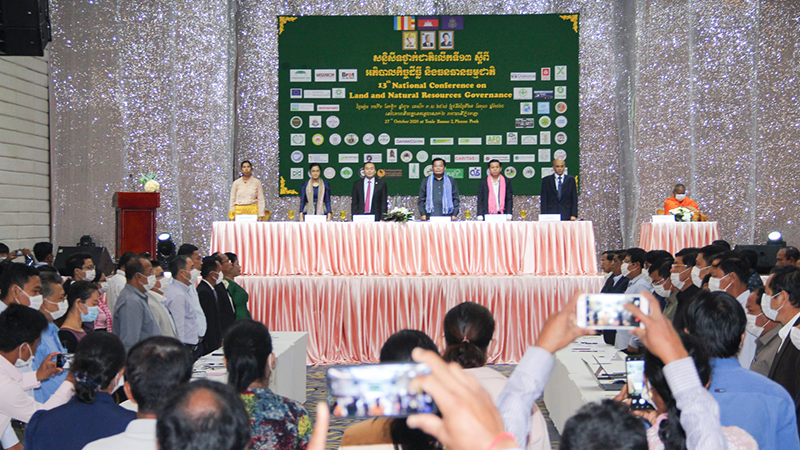
CDRI Deliveries Keynote at National Conference on Land and Natural Resources Governance
27 October 2020CDRI Senior Management was invited to deliver a key-note on the Land and Natural Resources Governance at the National Conference on Tuesday, October 27, 2020, at the Bassac II. It was attended by over 150 participants from the provinces, key ministries and departments, and repres...
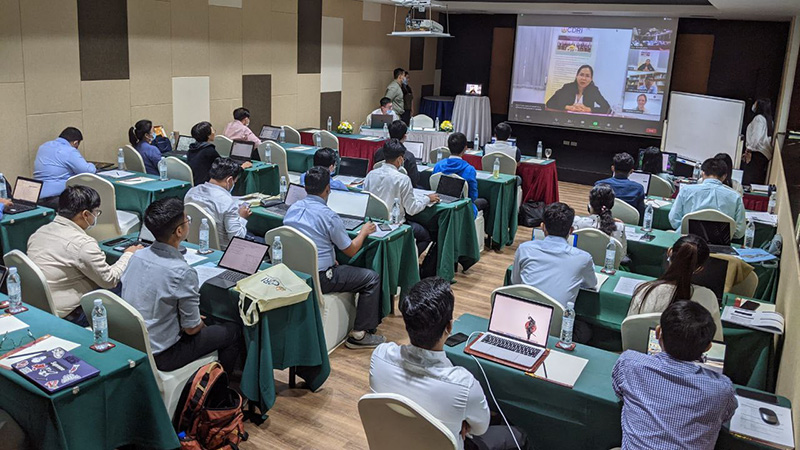
Training on Introduction to R for Quantitative Data Analysis
04 February 2021In collaboration with The Asia Foundation and under financial support from the Australian Department of Foreign Affairs and Trade (DFAT), the Centre for Educational Research and Innovation (CERI) has organizing a three-day intensive workshop on “Introduction to R for Quantitative...