
News
30 October 2026Middle-Income Cambodia – Trap or Opportunity: Using Carrots and Sticks to Promote Formalisation (Part II)
កម្ពុជាក្នុងឋានៈជាប្រទេសមានចំណូលមធ្យម
– ជាអន្ទាក់ ឬជាកាលានុវត្តភាព៖ ការប្រើប្រាស់វិធានការការ៉ុត និងដំបង ដើម្បីជំរុញការចុះបញ្ជីក្នុងប្រព័ន្ធផ្លូវការ
សារគន្លឹះ
- អត្ថបទប្លុកនេះផ្តោតលើគំនិតដែលថា ក្រុមហ៊ុន
ឬសហគ្រាស នឹងពិចារណាបន្តស្ថិតនៅក្នុងសេដ្ឋកិច្ចក្រៅ រហូតទាល់តែអត្ថប្រយោជន៍ដែលទទួលបានមានទំហំធំជាងបន្ទុកចំណាយនៃការចូលទៅក្នុងប្រព័ន្ធផ្លូវការ។
- មានហេតុផលចំនួន ៤ យ៉ាងដែលរាជរដ្ឋាភិបាលគួរតែខិតខំជំរុញការចុះបញ្ជីក្នុងប្រព័ន្ធផ្លូវការ
រួមមាន៖ ប្រសិទ្ធភាពសេដ្ឋកិច្ច កំណើននៃចំណូលពន្ធរដ្ឋ ការបង្កើតការងារដែលមានគុណភាពប្រសើរជាងមុន និងការកែលម្អអភិបាលកិច្ច។
- មានភស្តុតាងជាច្រើនដែលគាំទ្រទស្សនៈនេះ—ការសិក្សាស្រាវជ្រាវជាទូទៅបានរកឃើញថា
សហគ្រាសមើលឃើញទាំងអត្ថប្រយោជន៍ និងបន្ទុកចំណាយដែលទាក់ទងនឹងការចុះបញ្ជីក្នុងប្រព័ន្ធផ្លូវការ—ដូចនេះ
ទាំងវិធានការលើកទឹកចិត្ត (ការ៉ុត) និងវិធានការតឹងរ៉ឹង (ដំបង) សុទ្ធតែមានសារៈសំខាន់ក្នុងការជំរុញឱ្យមានការចុះបញ្ជីក្នុងប្រព័ន្ធផ្លូវការ។
- ពុំទាន់មានភស្តុតាងច្បាស់លាស់ដែលបង្ហាញពី «តម្រូវការលាក់កំបាំង» ក្នុងការចុះបញ្ជីក្នុងប្រព័ន្ធផ្លូវការ
ក្នុងចំណោមសហគ្រាសនៅកម្ពុជា ឬនៅក្នុងប្រទេសកំពុងអភិវឌ្ឍន៍ផ្សេងទៀតនោះទេ។
- សហគ្រាស ឬក្រុមហ៊ុននៅកម្ពុជា សុខចិត្តបន្តស្ថិតនៅក្រៅប្រព័ន្ធផ្លូវការ
ដែលនេះមានន័យថា អត្ថប្រយោជន៍នៃការស្ថិតនៅក្រៅប្រព័ន្ធ មានទម្ងន់ជាងអត្ថប្រយោជន៍នៃការចូលទៅក្នុងប្រព័ន្ធផ្លូវការ។
- ជាអនុសាសន៍គោលនយោបាយ រាជរដ្ឋាភិបាលត្រូវផ្តោតលើការបង្កើនបន្ទុកចំណាយនៃការបន្តស្ថិតនៅក្រៅប្រព័ន្ធ (វិធានការដំបង) និងការបង្កើនអត្ថប្រយោជន៍នៃការចូលទៅក្នុងប្រព័ន្ធផ្លូវការ (វិធានការការ៉ុត)។
Key Messages
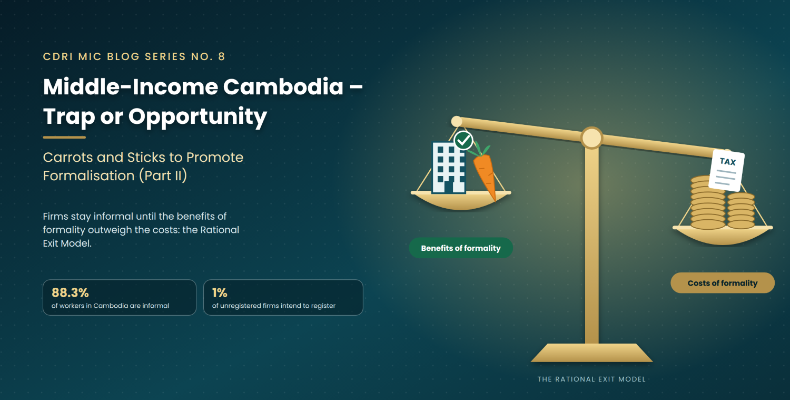
- This blog focuses on the idea that firms will rationally remain in the informal sector until the benefits are greater than the costs of formality.
- There are four reasons why the government should seek to encourage formalisation: economic efficiency, the potential loss of government revenue, the creation of better jobs, and improved governance.
- There is ample evidence for this view—studies typically find that firms see both benefits and costs associated with formalisation—both carrots and sticks are important to encourage formalisation.
- There is little evidence of ‘latent demand’ for formalisation among firms in Cambodia or other developing countries.
- Firms are happy to remain informal in Cambodia, meaning the benefits of being informal outweigh the benefits of becoming formal.
- Policy recommendations revolve around increasing the costs of remaining informal (sticks) and increasing the benefits of becoming formal (carrots).
Introduction
The Cambodian economy is dominated by the informal
sector, whether defined in terms of employment or production. Using the 2022
Economic Census, the UNDP concluded that 88.3 percent
workers in Cambodia and 87.6 percent of establishments were informal. CDRI
research by An and Chhorn noted that only
about 3 percent of microenterprises were formally registered with the Ministry
of Commerce, compared with 75 percent of large firms. The first blog in this
three-part series examined the De Soto hypothesis, the idea that potentially
productive and dynamic firms were held back by the bureaucratic and other costs
of formalisation. Thus deprived of the benefits of formalisation—access to
credit, ability to supply formal sector firms, protection from government
harassment, and ability to employ better educated and skilled workers—firms
remained small, informal, and low-productivity. Formalisation, in the De Soto
view, will help unleash entrepreneurship and dynamise firm-level productivity
growth. The first blog found limited evidence for the De Soto view in Cambodia
and in developing countries more widely; formalisation will have positive but
only limited economic benefits.
This blog focuses on an alternative model of the
informal economy, known as the ‘Rational Exit
Model’
that argues firms will rationally remain in the informal sector until the
benefits are greater than the costs of formality. Unlike the De Soto model,
this view focuses more clearly on the benefits firms gain from remaining in the
informal sector. Here, formality can be considered like any other investment
decision; firms will evaluate the costs and benefits before investing the
resources needed to formalise.
Why Should the Government be Concerned
with Formality?
The Rational Exit model sees firms as making a
rational and well-considered decision; they remain informal or formalise based
on a careful consideration of the costs and benefits or profits of doing so.
Why then should governments be concerned? This is for four reasons: economic
efficiency, the potential loss of government revenue, the creation of better
jobs, and improved governance.
Firstly, the co-existence of formal and informal firms
is inefficient because firms in the same industry face different marginal
production costs; informal firms are likely to pay lower wages but only be able
to access higher-cost capital (loans), leading to an inefficient use of
resources.
Secondly, informality is associated with lower tax
collection,
restricting the government’s ability to finance public services. One survey found that “government
revenues in emerging markets and developing economies with higher informality
were five to 12 percentage points of GDP less than those with lower informality.”
This may only be a long-term factor; a study of Benin, for example, showed that
tax incentives given to firms to encourage them to formalise may lower tax
revenue in the short run.
Thirdly, formal sector jobs are likely to be
associated with better working conditions, sick pay, and security. In Cambodia, formalisation is
often associated with firms and workers joining the National Social Protection
Policy.
Fourthly, formalisation may improve governance. A study of Sri Lanka showed that there
were “very strong positive effects of formalising on trust in the provincial
government and trust in the municipal government.” The study explained this by firms
being pleasantly surprised that the formalisation process was easier and less
subject to bribes than they had imagined and that formalising was associated
with a reduced worry about being fined or closed by the government for lack of
compliance.
Firms See Both Costs and Benefits to
Formalisation
There is ample evidence for the Rational Exit Model; studies
typically find that firms see both benefits and costs associated with
formalisation.
A 2025 survey of 2,741 firms in Cambodia by the Asia Foundation found that firms
perceived some benefits of formalisation, including the ability to access
finance and government support, but that it also came with costs, including
greater scrutiny from government and associated regulatory requirements.
In one study of Benin, while 31 percent
of firms considered the cost of formalisation too costly or time-consuming,
many firms also focused on the costs of formalisation, including the higher
level of taxes on formal firms (26 percent).
A survey of more than 10,000 businesses in Belo Horizonte
Brazil,
found that firms saw advantages of formalisation, including the ability to open
a business bank account (51 percent), a better reputation for the business (47
percent), reduced risk of being fined (44 percent), ability to get business
loans (43 percent), and the ability to sell to other firms that require
registration (39 percent). The same survey found that firms saw disadvantages
of formalisation, including the initial costs of registration (62 percent),
having to pay taxes (58 percent), having to pay for an accountant (34 percent),
and the process of registering taking too much time (32 percent).
A survey of
household business in Vietnam in 2007–2008 and 2014–2015 found that
there were minimal costs to remaining formal, informal firms were almost never
asked to register and were generally “ignored by authorities.”
Using World Bank surveys for a sample of ten
developing countries
found that 75 percent of firms mentioned ‘better access to financing’ as a gain
from formalisation while only 14 percent added ‘better access to markets’ and
less than 10 percent ‘more access to government programmes’ or ‘access to
better infrastructure’. Those same samples found benefits of remaining
informal, including the ability to avoid (about 75 percent of) taxes.
A 2008 survey of
small informal firms in Sri Lanka found that formalisation was cited as
making it easier to get a loan or open a bank account (58 percent of firms) and
other factors, including access to government programmes, increasing the scale
of production, and avoiding fines (10–15 percent). There were few costs of
remaining informal, as few (less than one percent) of informal firms reported
being fined or paying a bribe as a consequence of being informal in the last
twelve months
Where is the Firm-Level Demand for
Formality?
In the De Soto view, firms want to formalise—to enjoy
all those benefits noted in the introduction—but are held back by the
associated costs of doing so. In reality, evidence shows that there is little
such ‘latent demand’ for formalisation among firms in Cambodia and elsewhere. Studies show that lower
registration costs generally bring few informal firms into the formal sector. This
is good evidence for the Rational Exit Model and shows that firms are generally
happy to remain informal.
A 2025 survey of 2,741 firms in Cambodia by the Asia Foundation found that only 1
percent of unregistered firms expressed an intention to register.
Surveys across developing countries found that an average surveyed
informal firm
has been in business for nearly a decade without attempting to become formal.
In 1996, the government of
Brazil
combined multiple taxes and contributions into a single, reduced payment for
small firms and significantly reduced the number of procedures and cost to
register a new business—the SIMPLES tax system. Survey data from
2009
showed that more than 72 percent of firms remained informal, a share little
changed over the preceding 13 years.
An experimental
intervention
in 2011–2012 across 10,000 firms in Belo Horizonte, Brazil that variously
provided information, exempted firms from registration fees and provided free
accountancy services had no positive impact on firm formalisation.
A 2008 field experiment
in Sri Lanka
that provided information and reimbursed the cost of registration for small (1–14
employees) informal firms and even provided cash bonuses for firms that
formalised found little impact on formalisation.
In Benin, the government reformed the registration
process to reduce costs (less than USD30), documentation required (just a legal
ID and a single short application form), and the registration time (to a single
day). Despite these reforms, less than 2 percent of firms
in a survey
formalised over a two-year period.
Policy in Cambodia
In the December 2024 Economic Update on
Cambodia,
the World Bank highlighted the centrality of the Rational Exit Model for
thinking about formalisation, arguing that Cambodia should “ensure that the
benefits of firm registration outweigh the costs, and that formality offers a
pathway to higher productivity and better business opportunities.”
a) The Carrots Policy: Increase the
Benefits of Formality
In the December 2024 Economic Update on Cambodia, the World Bank argued that
“Cambodia could offer temporary tax breaks or reduced fees for newly registered
firms.”
As described in the first blog in this series, Cambodia has
an excellent regulatory framework regarding business entry. Part of this
framework are just the sort of incentives for small and medium enterprises
(SMEs) to register that the World Bank advocates. These incentives include a three-year income tax
exemption for new SMEs in certain sectors, and for all SMEs located in SME
clusters. Some SMEs in selected sectors can obtain five-year exemptions when
meeting certain employment and local input thresholds. The problem is with the
implementation of these incentives. For example, tax officers have required
SMEs to show ‘proof’ that the firm voluntarily registered in order to claim the
incentives, and the failure to do so has been met with penalties and demands
for back taxes. UNDP survey evidence also shows that formalising creates
risk associated with both past and future tax obligations. The General Department
of Taxation (GDT)
has the ability to reclassify taxpayers and overrule self-assessments, which
could lead to tax assessments that are significantly larger than expected. The
incentive regime should be clarified and such discretionary implementation
removed from tax officials.
A survey by CAPRED of 402 firms in
Cambodia found that large firms only source 7 percent of their inputs from formal
local Cambodian firms. A key reason is that supplying large firms requires that
small firms be registered for VAT. Formal registration will enable firm owners
to claim tax credits for their purchases from registered suppliers, which gives
established firms an incentive to trade with newly formal firms. In Cambodia, formal firms
must register with the GDT to obtain the identification number for VAT. While
VAT registration has been described as “moderately easy” by one review,
as it can be done online and costs only USD100, it may still take up to thirty
days. A commonly cited global complaint is the delay in paying out VAT refunds
by the government. Until 2018, this process could take years in Cambodia; since
then, GDT reforms claim to have reduced this to forty working days. Given wider
problems with policy implementation in Cambodia, it is important to survey and
review the refund process.
b) The Sticks Policy: Increase the
Costs of Informality
The formal rules in Cambodia prescribe significant
costs to non-compliant informal sector firms. The GDT has the authority to
assess back taxes, and charge penalties and interest at a rate of 1.5 percent
per month. This is compounded by an incentive structure that may reward tax
officials for charging large penalties, creating an incentive for them to “go
after” companies. These official rules (policy implementation again) are combined
with a lack of capacity to chase informal
firms. Both the National Social Security Fund and the Ministry of Labour and
Vocational Training, for example, face capacity constraints as the growth in
the number of inspectors has not kept pace with the growth in the number of
enterprises.
There is a large body of evidence that shows that increases
in the probability of detection and enforcement lead to an increase in tax
compliance. There is less empirical evidence on whether enforcement attempts
can induce firms to register or whether, instead, they cause informal firms to
close down and prevent other firms from starting up. A field experiment with the state
government of Minas Gerais in the city of Belo Horizonte in Brazil found that randomly
assigning municipal inspectors to firms only induced 3 percent of those firms
to formalise. The study also found that the cost of greater inspections
outweighed the revenue benefits to the government of formalisation.
Conclusion
This blog focuses on the Rational Exit Model, the idea
that firms will remain in the informal sector until the benefits are greater
than the costs of formality. There are four reasons why the government should
seek to encourage formalisation: economic efficiency, the potential loss of
government revenue, the creation of better jobs, and improved governance. There
is ample evidence for this view—studies typically find that firms see both
benefits and costs associated with formalisation; both carrots and sticks are
important to encourage formalisation. There is little evidence of ‘latent
demand’ for formalisation among firms in Cambodia or other developing
countries. Firms are happy to remain informal in Cambodia, meaning the benefits
of being informal outweigh the benefits of becoming formal. Policy
recommendations revolve around increasing the costs of remaining informal
(sticks) and increasing the benefits of becoming formal (carrots). The final
blog in this three-part series will argue that carrots are the more appropriate
policy response in Cambodia.
Look out for Middle-Income Cambodia – Trap or
Opportunity: Why Economic Development is the Best ‘Cure’ for Informality (Part
III)
Authors
Prof. Dr Matthew McCartney, Chief Economist,
CDRI
Mr Temugin Cattaneo, Researcher,
Centre for Development Economics and Trade, CDRI
Related News

CDRI Board of Directors Meeting
04 November 2020The Board of Directors (BoD) of the Cambodia Development Resource Institute (CDRI) met at a virtual meeting on 3rd November 2020. All 10 existing BoD members attended and actively engaged in the deliberation and comments. For further information about CDRI BoD, please visit CDRI...

CDRI Deliveries Keynote at National Conference on Land and Natural Resources Governance
27 October 2020CDRI Senior Management was invited to deliver a key-note on the Land and Natural Resources Governance at the National Conference on Tuesday, October 27, 2020, at the Bassac II. It was attended by over 150 participants from the provinces, key ministries and departments, and repres...
Training on Introduction to R for Quantitative Data Analysis
04 February 2021In collaboration with The Asia Foundation and under financial support from the Australian Department of Foreign Affairs and Trade (DFAT), the Centre for Educational Research and Innovation (CERI) has organizing a three-day intensive workshop on “Introduction to R for Quantitative...